Cyanosis
Blue or gray tint to the lips or skin may suggest low oxygen in the blood.

Congenital heart disease is a structural problem in the heart present at birth. Early diagnosis helps identify the type of defect, understand its effect on blood flow, and plan the right treatment at the right time.
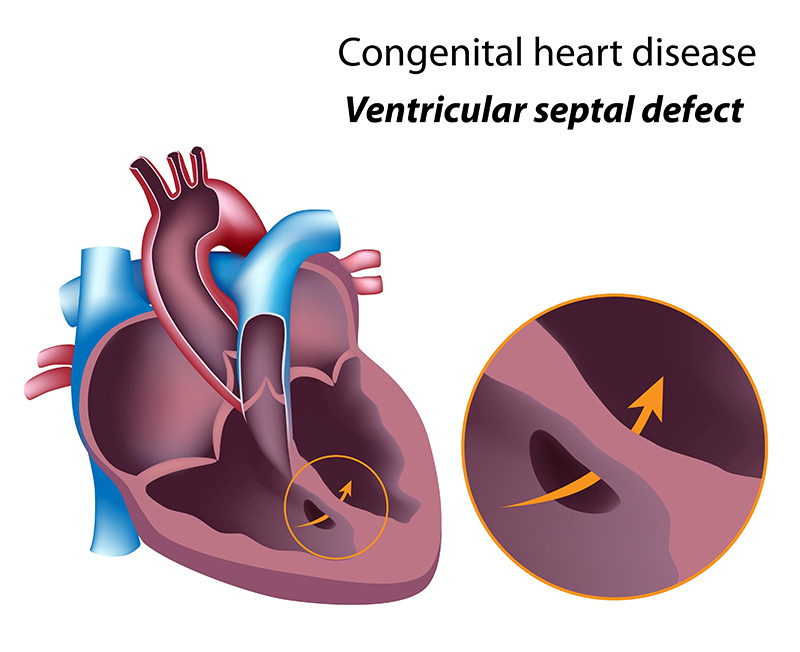
Congenital heart disease occurs because of a structural abnormality in the heart at birth. It may involve a defect in the heart valve, a hole in the heart, problems in the arteries or veins connected to the heart, or an issue in one or more chambers.
CHD can present with arrhythmias, cyanosis, dizziness or fainting, shortness of breath, tiredness without exertion, swelling, or poor feeding in babies. Some children are diagnosed soon after birth, while others are identified later in childhood or adulthood depending on the defect.
Modern cardiac imaging and specialist evaluation help define the type and severity of the defect. Treatment may include observation, medication, catheter-based procedures, or surgery, depending on the anatomy and symptoms.

Blue or gray tint to the lips or skin may suggest low oxygen in the blood.
Reduced blood flow or rhythm changes can lead to lightheadedness or collapse.
Shortness of breath may appear with feeding, play, or mild exertion.
Children may tire easily, feed poorly, or fail to gain weight as expected.
Holes between the chambers can let blood mix and increase strain on the heart and lungs.
Stenosis or leakage can affect how efficiently blood moves through the heart.
Abnormal position or narrowing of major vessels can change oxygen delivery and circulation.
Some babies are born with multiple structural problems that need staged or surgical repair.
Congenital heart disease, also called CHD, is among the most common birth defects and may range from a small, silent defect to a complex condition that requires ongoing cardiology care. Early detection improves outcomes, supports growth and development, and helps families plan the right treatment pathway.
Some defects can be repaired or significantly improved, while others need lifelong monitoring and treatment. The answer depends on the type of defect.
Doctors may detect it before birth, right after birth, or later using echo, ECG, oxygen checks, and imaging studies.
No. Some are mild and discovered during routine evaluation, while others cause clear breathing, feeding, or oxygen-related problems.